
Choosing a commercial electronic security installer is a longer-term decision than most buyers realise. The hardware lasts 8-12 years. The relationship with the installer who services it usually lasts longer. Here's what to check before you sign anything.
The hard credentials to verify
Start with the licensing. In NSW, any business installing or maintaining electronic security for a third party has to hold a Master Licence under the Security Industry Act 1997. It's not optional, it's not hard to look up, and anyone operating without one is already breaking the law.
1. NSW Master Licence number
Ask for the number. It should look like a six-digit integer (ours is 102039). Then check it against the public SLED register at police.nsw.gov.au. Confirm the sub-classes cover the work you need (Class 2A covers most install work; Class 1F covers monitoring).
2. ASIAL membership
The Australian Security Industry Association Limited grades its members (bronze, silver, gold). Gold membership requires an audit of operations and insurance. ASIAL membership isn't legally required but it's a strong signal — the installer has invested in a voluntary industry accreditation that competitors who cut corners typically skip.
3. Insurance certificates
Ask for current certificates of currency for public liability, professional indemnity, and product liability. For commercial work, $20M public liability is table stakes. Anything less and you're personally underwriting their shortfall if something goes wrong on your site.
4. ACMA Cabler Registration
Any technician connecting cabling to the public telecoms network (including structured data cabling that touches a comms room with a telecom carrier handoff) needs ACMA Cabler Registration. Ask whether their techs hold it. The Open registration (plus structured cabling and fibre endorsements) is the one you want for commercial installs.
The soft signals that actually matter more
Credentials get you to a shortlist. These are the signals that separate the installers you'll be happy with in year three from the ones you'll be replacing in year two.
Who is on your site?
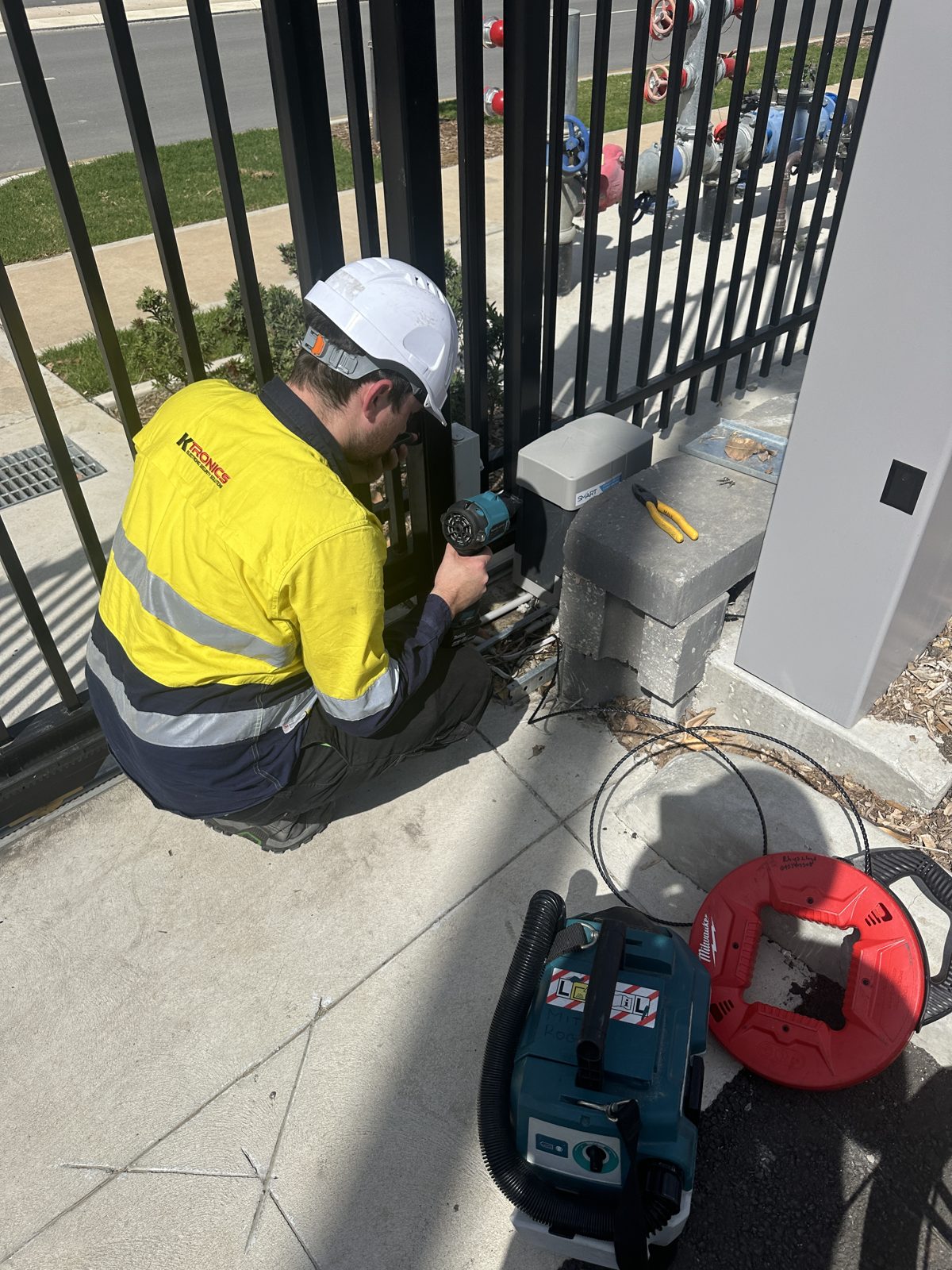
This is the single most predictive question. The installer sends a salesperson who takes measurements, writes a quote, and then hands off to a subcontractor crew you've never met. Or the installer sends the tech who will quote, design, install, commission, and maintain the system — all the same person or small team.
The second model costs more upfront and saves significant money over the system's life. Fewer handoff errors, fewer "that's not what the quote said" conversations, faster service response. We call this trade-led, and it's the model we built the business around. See how we work for the deeper read.
Will they sub-contract the install?
Ask directly. "Will the techs on site on install day be your employees or sub-contractors? If sub-contracted, which company and under what arrangement?" Sub-contracted install isn't automatically bad, but it's a different accountability model. You want to know before, not after.
What is the service model?
Ask what happens 18 months after install when something stops working. Who do you call? What are the response times? Are those response times written into a contract or just promised in conversation? Does the installer have an in-house monitoring control room or do they sub-contract that too?
What's the staff retention?
"How long have your senior techs been with you?" is a question most installers will give you a straight answer to, and the answer tells you a lot. If the senior tech installing your system has been with the company six months, you're not getting the knowledge base the quote is implying. If they've been there a decade, you are.
Eight questions to put to any installer before signing
- What's your NSW Master Licence number, and when was it last renewed?
- Who exactly will be on site on install day? Employee or sub-contractor?
- What's the written response SLA on a monitored alarm event? On a non-urgent service call?
- Can I see the as-built documentation you provided to a comparable client at handover?
- Can you walk me through a job you did five years ago and what's happened on that site since?
- What's your average technician tenure?
- What happens if a key tech leaves — who takes over my account?
- What's the exit path if we want to leave in two years? Who owns the configuration data?
A confident installer answers these cleanly. A guarded one dances around them. That's informative in itself.
Red flags that should rule out a quote
- Quotes written from photos or a Google Street View walk. Any serious commercial install needs an on-site walk-through. If the quote arrives without one, the install is being costed from guesswork.
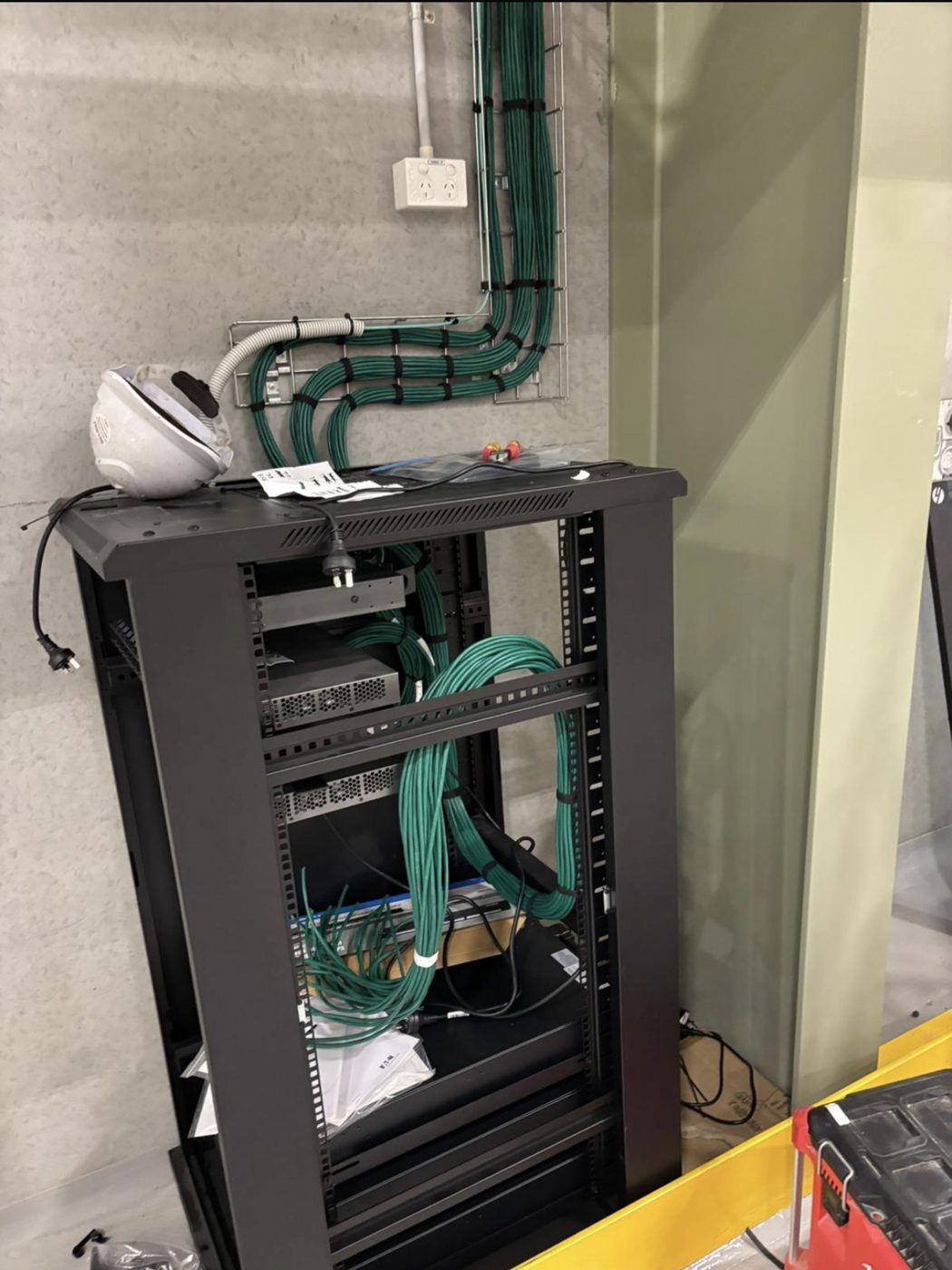
- No written as-built documentation at handover. You should receive drawings, a cable schedule, device inventories, and user credentials in a form you can hand to the next installer. If you're told "we keep that internally", your system is held hostage to the installer's continued involvement.
- No service plan offered or quoted. Install-only installers who don't want to maintain the system afterwards are an operational risk. The install margin pays for itself; the service relationship is where long-term quality comes from.
- Vague on brands. "We use the best for your situation" with no specifics on the table means the installer is still negotiating with a supplier. Serious installers tell you upfront which access control, CCTV, and alarm platforms they install and why.
- No references they're willing to put on a call. References don't have to be named publicly — our case studies are anonymised — but any installer should be willing to connect you with a current client for a 10-minute reference check.
- Cheapest by a lot. Commercial electronic security prices cluster within a predictable band. A quote that's 30-40% below the others is signalling cheaper components, sub-contracted labour, or scope the salesperson forgot to add. The difference will come back as a change order.
What "trade-led" actually means (and why it matters)
"Trade-led" is the language we use for installers who are structured around technicians rather than around sales. There's no separate sales team: the tech who quotes the job also designs, installs, commissions, and maintains it. The commercial outcome of this model is that fewer things get lost in translation between sales and delivery, scope creep is caught earlier, and the person answering a service call three years in is the person who understands the install.
It's not the only valid model — some large installers run a sales/delivery split cleanly — but for mid-market commercial clients without a dedicated in-house security team, trade-led tends to deliver materially better outcomes over a 5-10 year horizon. Worth asking any shortlisted installer how they're structured.
Where to start
Shortlist 2-3 installers, do the credential checks on each, invite them to walk your site, and ask the eight questions above. Trust the one who answers them directly, documents their recommendations in writing, and tells you upfront what they won't do as well as what they will.
If you'd like Ktronics on that shortlist, get in touch. We'll walk your site, give you a fixed-price quote, and happily put you on a call with a current client of comparable size so you can hear it unfiltered.