

Alarms that fire when they should, and not when they shouldn’t.
Most commercial alarm systems generate enough false alarms that the team eventually learns to ignore them. We design intrusion alarm systems that don't do that. Properly placed sensors, dual-tech detection where it matters, sensible zoning, integration with CCTV for verified response, and back-to-base monitoring through our own 24/7 control room. Bosch, Inner Range, and Tecom Challenger platforms.
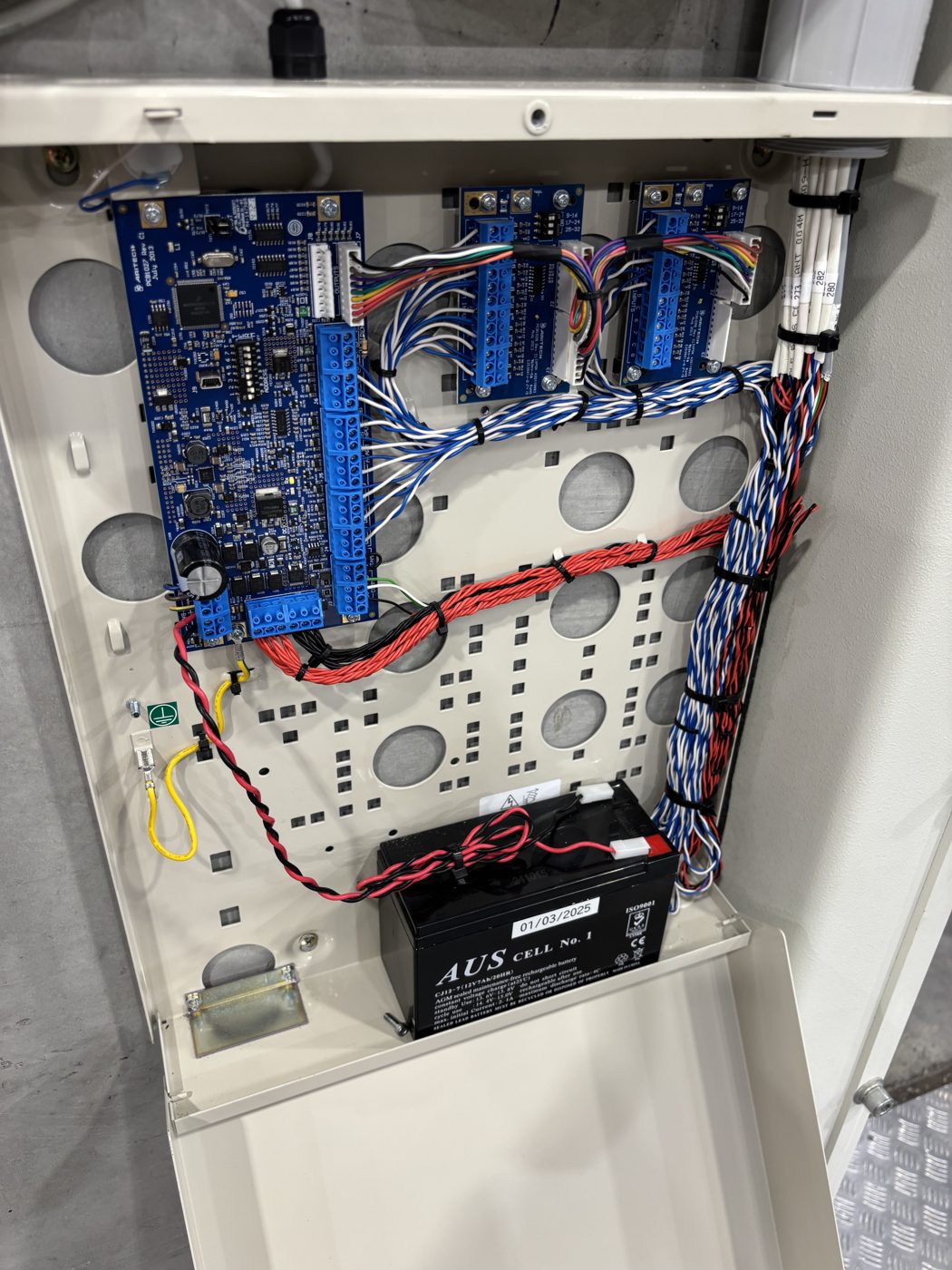
What it covers.
-
Intrusion detection
PIR motion, dual-tech (PIR + microwave), glass-break, shock, and vibration sensors. Selected and placed to your site, not by spec sheet.
-
Perimeter and external
External beams, photoelectric perimeter detection, and fence-line vibration sensors. Catches intrusion before it reaches the building.
-
Door, window, and gate contacts
Magnetic and high-security contacts on every opening. Tamper-protected, supervised, and resistant to magnetic attack.
-
Duress and panic
Hold-up buttons at reception, cash-handling areas, and executive offices. Silent panic that triggers monitoring without alerting the offender.
-
Back-to-base monitoring
Alarms verified by our 24/7 control room. Real human response, not auto-dismissed alerts. Police, key-holder, or our on-call tech dispatched per your response plan.
-
CCTV-verified response
Alarm event triggers an automatic camera bookmark. Operator reviews the footage in seconds and dispatches based on what is actually happening.
From first walk to ongoing service.
Same process every time. Same techs every step. No surprises in the quote, no surprises on install day.
Site walk
We map the entry points, the high-value zones, the after-hours flow, and the false-alarm risk factors (HVAC vents, blinds, animals, signage).
System design
Sensors, panel, communication path, and zoning specified. Where false-alarm risk is high, we spec dual-tech or video-verified detection.
Install and commission
Sensors mounted with attention to coverage angles. Panel installed in a tamper-protected location. Walk-test every sensor before handover.
Onboard to monitoring
System connected to our control room. Test events confirmed end-to-end. Response plan documented and signed off.
Frequently asked.
-
How do I avoid false alarms?
Most false alarms come from poorly placed sensors and inappropriate sensor types. The fix is upstream of the install: we design sensor placement around HVAC vents, sunlight, blinds, signage, and any other movement source on your site. For high-risk zones we spec dual-technology sensors (PIR + microwave) that require both signals to fire. For very high-risk environments, video-verified alarms add a second layer of confirmation before dispatch. -
Do I have to use your monitoring control room?
No. We can connect alarms to whichever monitoring centre you prefer, including ones you already use. That said, the ones we install and monitor end-to-end run cleanly because the install team and the monitoring team are the same business. If you're moving from another monitoring provider, we can usually take over the connection without changing the panel. -
How is the alarm signal sent to monitoring?
Modern commercial alarms use IP as the primary path with cellular (3G/4G) failover. The legacy phone-line dialler is end-of-life and we don't install it on new systems. Dual-path (IP + cellular) is mandatory for grade A2 / Class 5 compliance and we recommend it for any commercial installation. -
Can the alarm system integrate with access control and CCTV?
Yes, this is the standard configuration on Inner Range Integriti and Tecom Challenger. A door-forced alarm event triggers a camera bookmark. A duress press at reception locks down all external doors and pops up the relevant cameras. The integrated platform is significantly more useful than three separate systems for any operationally active site.