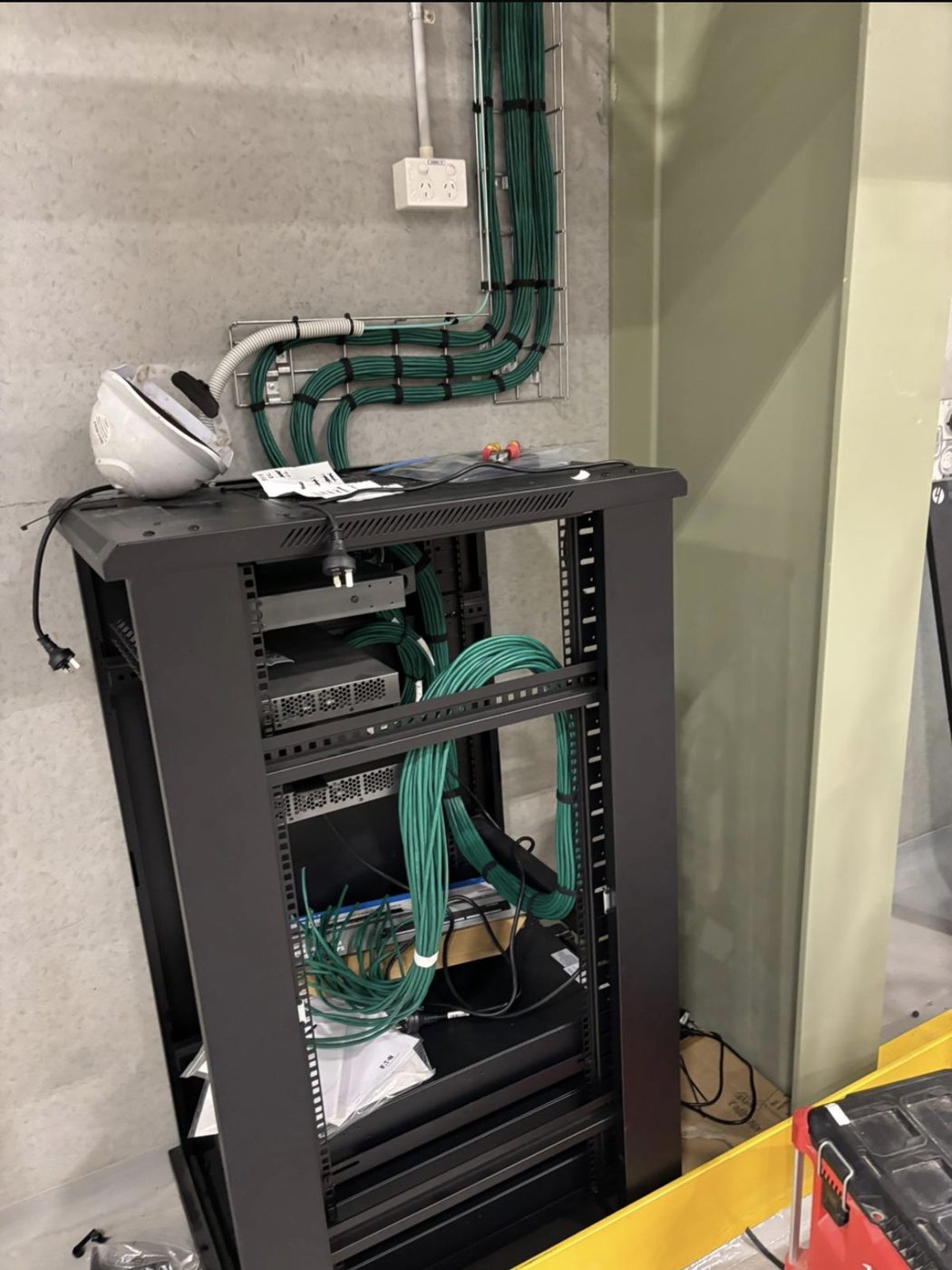
"Integrated security" sells well in pitches. One platform, one dashboard, all your access control, CCTV, and alarms talking to each other. The reality is more nuanced. Integration genuinely pays off in some scenarios and adds cost without proportionate benefit in others. Here's an honest read on when it's worth doing, and when separate systems are the smarter call.
What "integrated" actually means
The word gets used loosely. There are three different things that might be on the table when an installer talks about an integrated system, and they're not the same.
1. Single-platform integration. Access control, CCTV, and intrusion all run on one management software platform from one vendor. This is what most people mean by "fully integrated". Examples: Inner Range Integriti with their CCTV add-on; Lenel OnGuard with integrated video.
2. Cross-platform integration via APIs. Best-of-breed products from different vendors connected through documented APIs or middleware. Genetec Security Center is a common umbrella here, pulling video from one vendor and access from another into one operator view.
3. Loose integration via event triggers. Separate systems that pass a few key events to each other. A door-forced alarm on the access platform triggers a camera on the CCTV platform to bookmark the clip. The systems otherwise run independently.
These three patterns have very different cost profiles, very different operational characteristics, and very different failure modes. Knowing which one you're actually being sold is the first thing to clarify.
Where integration genuinely pays off
Operations centres with active monitoring
If your site has an operator watching screens, integration is a significant productivity gain. When an alarm fires, the operator sees the camera feed of the relevant area pop up automatically, sees who badged in last, and can act in seconds rather than alt-tabbing between three different applications. This is where the integrated pitch is at its most legitimate. Critical infrastructure, large distribution centres, hospital security, university campuses, all benefit visibly from this.
Investigations and incident response
The post-event workflow is where integration earns its keep on smaller sites too. A door-forced alarm that automatically bookmarks the matching CCTV clip and links it to the cardholder record turns a half-hour investigation into a five-minute one. If your site has more than a handful of incidents a year that need investigating, this is real value.
Multi-site enterprise rollouts
For organisations running 10+ sites, integration gives you a single-pane-of-glass view across the estate. National retailers, aged care providers, distribution networks, and healthcare groups benefit from being able to see the security posture of every site in one place, with consistent role-based permissions and consistent incident workflows.
Compliance-heavy environments
Where audit requires you to demonstrate that "this person accessed this area at this time, here's the corresponding video", an integrated platform makes the evidence trivially exportable. Pharma, high-security data, and licensed venues are the clearest cases. Pulling the same evidence from disconnected systems is doable but much slower and more error-prone.
Where integration is oversold
Small to mid-size single-site commercial
A 12-door office or warehouse with no on-site monitoring rarely extracts the value to justify the integration cost. The CCTV gets looked at when something happens. The access control runs in the background. The integration premium pays for capability nobody is actually using day-to-day. We routinely install separate systems on sites like this and the operational impact is zero.
Sites with mixed legacy hardware
Trying to integrate a 10-year-old access control platform with a new CCTV system, or vice versa, often costs more than replacing the older system outright. The integration work, the licensing for the middleware, and the ongoing maintenance complexity can quietly eclipse the saving from keeping the legacy gear. A plan to upgrade the older platform first and integrate at the next refresh is usually a better long-term call.
Buyers who want "future-proofing"
"We might want to integrate in five years, so let's buy integration-capable kit now" is a tempting argument that often doesn't survive contact with reality. Five years on, the platform you bought has evolved, your needs have evolved, and the integration you actually want may not be the one the original architecture supported. Buy what you need now from products with documented APIs. The future will look after itself.
The three questions that actually decide it
1. Is anyone watching?
Integration delivers most of its value to live operators. If your security platform is checked only when something has already happened, the integrated workflow benefits are mostly theoretical. If you have an active control room, dispatch desk, or even a full-time receptionist who triages alerts, integration earns its cost.
2. How often do you investigate incidents?
A site that runs three incidents a year doesn't need one-click cross-system evidence retrieval. A site that runs three incidents a week absolutely does. The volume of investigations is the strongest predictor of integration ROI on the post-event side.
3. How many sites?
Integration scales. The cost of integrating two systems on one site might not be justified, but the cost of integrating two systems across thirty sites almost always is, because the consistency and centralised reporting compound across the estate.
The cost difference (rough numbers)
For a representative 12-door commercial site, here's how the economics typically shake out at install:
| Pattern | Install cost | Annual platform cost | Notes |
|---|---|---|---|
| Separate access + CCTV (no integration) | $45,000 to $65,000 | $0 to $1,500 | Two management interfaces, no cross-system events |
| Loose integration (event triggers) | $48,000 to $72,000 | $0 to $2,000 | One-way event handoff; mostly free with modern platforms |
| Single-vendor integrated platform | $58,000 to $90,000 | $2,000 to $6,000 | One operator interface; vendor lock-in trade-off |
| Best-of-breed via Genetec or similar | $70,000 to $110,000 | $3,500 to $9,000 | Most flexibility; highest setup and licensing cost |
Numbers vary widely with site complexity, camera count, door count, and chosen vendors. Use these as orientation, not a quote.
The under-discussed downside: vendor lock-in
Single-vendor integrated platforms tie your access control, CCTV, and alarm hardware decisions together. When the vendor pushes a licence price increase, you don't have the option of keeping the access platform and switching the CCTV. When a competitor releases better cameras at a better price, the integration cost of swapping eats most of the saving. When the vendor sunsets a product line (which happens), you're sometimes forced into a forklift upgrade you didn't want.
Best-of-breed via an umbrella platform mitigates this but doesn't eliminate it; you're now dependent on the umbrella vendor instead. Separate systems with loose integration give you the most replacement flexibility at the cost of the integrated workflow benefits.
None of this is a reason to avoid integration. It's a reason to go in with eyes open about the trade-off.
What we usually recommend
- Small commercial single-site (under 30 doors, no operator): Separate systems with loose event-trigger integration. Keep it simple, keep the platforms swappable.
- Mid-size with active reception or facilities team: Single-vendor integrated platform. The operator workflow benefit starts to justify the cost.
- Multi-site (3+ sites) corporate or retail: Single-vendor integrated platform with cloud management. The consistency win across sites is real.
- Critical infrastructure, control rooms, large enterprise: Best-of-breed via Genetec or equivalent umbrella platform. The flexibility and the depth of operator workflow justify the premium.
- Heritage building, hard-to-cable, mixed legacy kit: Whatever pattern lets you keep what works and replace what doesn't, one piece at a time. Don't let an integration ambition force a forklift you can't justify.
Questions to ask before signing
- What pattern of integration are you proposing (single platform, umbrella, or event triggers)?
- What does the integration cost in licence fees and maintenance over five years?
- If we want to swap one component (say, cameras) in three years, what does the integration cost us?
- What happens to the integration if one vendor changes their API or sunsets a product line?
- Walk me through a real workflow that integration improves on our site. Specific operator action, specific time saving.
A good installer will be comfortable with all five questions. The last one in particular separates installers selling capability from installers selling outcomes.
The honest summary
Integration is a real productivity and investigation gain in operationally active environments and across multi-site rollouts. It delivers less than promised on small single-site commercial installations where nobody is actively watching. The cost premium is significant and locks you into a tighter vendor relationship. Decide based on whether you'll actually use the integrated workflow, not on the principle that more is better.
If you'd like a no-pressure walk-through of which pattern suits your site, get in touch. We install all three, and we'll tell you honestly which one fits.